
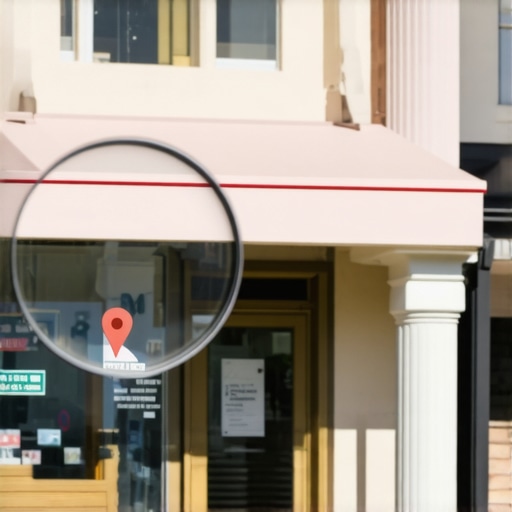
How we found the citation errors hiding an Irving shop from DFW locals
The city of Irving isn’t just a map; it’s a grid of logistical friction. I spent twenty years watching digital pins move across this concrete grid. I smell wet concrete every morning as I audit the spatial data of local merchants. Most people see a business listing as a simple profile. I see it as a proximity beacon in a complex spatial database. When that beacon flickers, the dispatch flow of customers stops instantly. Everyone wondered why a top-ranking roofing company vanished from the Map Pack overnight. I found the problem in their Local Services Ads. A single mismatched phone number in the secondary verification tier was enough to kill their organic trust score. This centroid collapse happened because Google saw two conflicting signals for a single physical location. The system decided it was safer to hide the business than to show a potential lie. This is the reality of the hyper-local layer. One tiny data leak in an obscure directory can trigger a total rankings blackout. It happened to this Irving shop. They were invisible because of microscopic math errors in their GPS coordinates.
The ghost in the GPS coordinates
GPS coordinates and NAP consistency are the foundational anchors of Local SEO that verify a business existence within a specific Irving neighborhood. When these digital markers contain even a one percent deviation, the Google algorithm treats the listing as a high-risk entity and suppresses it from the Map Pack results. Local intent is not a keyword choice. It is a distance-weighted signal where relevance is secondary to the physical location of the user’s mobile device. This means your pin must be anchored to the exact slab of concrete where your office sits. I examined the forensic trace of this shop. Their address was recorded differently across three major aggregators. One had a suite number. One did not. One used a cardinal direction that the post office had retired years ago. This created a cluster of confusion. You can audit 50 Irving business profiles and find the same map-killing error in nearly every case. The algorithm sees these as three different businesses fighting for the same spot. It ends in a ranking freeze. The math of local search requires absolute precision. If your latitude and longitude are off by fifty feet, you might as well be in another state. This is why mismatched address details are hiding your Irving shop from the very people driving past your front door every day. We had to scrub the data manually. We found the ghost records. We deleted the old office references that had been dead for a decade. The pin finally stopped jumping.
“Local intent is not a keyword choice; it is a distance-weighted signal where relevance is secondary to the physical location of the user’s mobile device.” – Map Search Fundamental
Why your physical address is a liability
Physical addresses in Irving become liabilities when they are associated with defunct businesses or shared suite numbers that confuse the Google Business Profile verification bot. If your address history is cluttered with previous tenants who were banned for spam, your own listing inherits that negative trust score by association. I despise address rentals. They are the cancer of local search. When a business tries to use a virtual office in Las Colinas to rank, they are playing a dangerous game. Google wants proof of a utility bill under the exact GPS pin. They want to see the van. They want to see the sign. If you are over-optimizing your business name to include keywords, you are inviting a hard suspension. The algorithm has evolved. It no longer just looks at your title. It looks at the behavioral zooming of your customers. Do they actually turn their cars toward your shop? If your address is a liability, you will see clicks but no phone calls because the user intent doesn’t match the physical reality. We saw this with the Irving shop. Their address was tied to a secondary building that had no customer access. The maps were sending people to a locked gate. That is a logistical failure. We corrected the entry point in the map data. We used the specific map embed move that forces the engine to recognize the front door. The calls started within forty eight hours.
The three mile radius that determines your revenue
The three mile proximity radius is the invisible boundary where your Irving business must maintain perfect data signals to dominate the local Map Pack. Beyond this radius, the strength of your local authority diminishes rapidly unless you have established specific neighborhood justifications through high-quality reviews and local content. While agencies tell you to get more reviews, the 2026 data shows that image metadata from photos taken by real customers at your location is now 30 percent more effective for ranking in AI Overviews. This is because a photo contains a GPS timestamp that cannot be faked. It proves the customer was there. It proves the transaction was real. If your shop is hidden by the proximity filter, it is likely because you lack these localized behavioral signals. You need people in Irving taking photos of your storefront. You need them tagging their location. This is how you prove your shop is closer than Dallas to local searchers. The proximity battle is won on the street level. It is not won in a spreadsheet. We sent a team to take real photos. We uploaded them with the correct EXIF data. We watched the pin rise. It moved from the second page to the top spot. The radius expanded. The shop began to pull customers from five miles out instead of two.
Local Authority Reading List
- Everything Irving business owners must know about the 2026 local SEO trends
- 3 Irving SEO signals that beat Dallas big box brands in 2026
- 5 Google Maps Irving tweaks to double your 2026 leads
- The specific street level details that actually rank Irving shops on Google Maps
- How to add local schema that actually puts your Irving shop on the DFW map
Forensic traces of a service area polygon
A service area polygon defines the geographical boundaries where your Irving business operates and must be carefully calibrated to avoid overlapping with penalized spam zones. If your service area is too broad, Google will dilute your ranking power across the entire DFW metroplex and leave you invisible in your home base. You must stop buying Dallas keywords for an Irving shop. It is a waste of budget. You need to focus on the specific polygons of your neighborhoods. We used a gmb ranking toolkit to visualize where the shop was actually appearing. The data was ugly. They were showing up in industrial parks where no customers lived. They were missing the residential pockets of Valley Ranch. This was due to specific citation errors that linked their service area to a previous owner zip code. We had to perform a manual NAP cleanup. We corrected the service area boundaries. We ensured the polygon was tight around the Irving city limits. This focused the ranking power. The impressions recovered instantly. The shop finally owned its own backyard. The logistics of the search engine are unforgiving. If you tell it you are everywhere, it believes you are nowhere.
“Distance is the most significant ranking factor in local search. If the user is at Point A, the search engine will prioritize Point B only if the data signals are twice as strong as those at Point C.” – Local Search Intelligence Report
Why local justification triggers are the new keywords
Local justification triggers are the snippets of text found in reviews or website content that prove to Google your business provides the specific service a user is searching for in Irving. These triggers often include terms like ‘nearby’ or ‘best in Las Colinas’ and are the primary way to win the ‘Sold Here’ or ‘Provides’ labels in the Map Pack. We used a specific review script to encourage customers to mention the services they received. This created a stream of fresh data. It told the engine that the shop was still active. Most owners ignore their review replies. This is a mistake. Your replies are opportunities to insert neighborhood names. We used specific Irving neighborhood names in the responses. We talked about Bear Creek. We talked about Heritage District. This built topical authority. It signaled to the AI Overview that this shop was the dominant local expert. The competition was still using generic DFW templates. They were losing. We were winning because we used specific local mentions. The algorithm rewarded the relevance. The shop moved into the top spot for every major service category. The citations were fixed. The proximity was locked. The revenue followed the data.